A new front door can change how your house looks from the street, but if you're comparing a steel vs fibreglass door, fibreglass is usually the better choice for most homes in Markham and York Region. It resists dents, won’t rust, handles Ontario weather well, and can mimic real wood, while steel is usually the lower-cost option that still makes sense for covered or secondary entrances.
Before you get to colours, glass, and handle sets, you have to pick a door material. That choice affects price, curb appeal, energy efficiency, maintenance, security, lifespan, installation, and how the door holds up through a York Region winter, so it shapes both the look of your entry and its long-term value.
If you're a Markham or York Region homeowner replacing a front door and deciding between steel and fibreglass, this article is written for you. I’ll walk through cost, durability, upkeep, insulation, security, style, lifespan, installation, and where each material makes the most sense. I've been fitting entry doors in Markham homes for over 30 years and I see what sorts of decisions residents make. Most end up choosing between steel and fibreglass, and a smaller group goes for real wood. Here's how they compare, and how I'd choose if it were my own house.
Steel vs Fibreglass Door: The Short Answer
For most homes, fibreglass makes the better front door and steel gives you the lower cost option. Fibreglass resists dents and won't rust, and the woodgrain styles can pass for real oak. Steel entry doors cost less and work well on a covered porch or a side door. Both fibreglass and steel are far more energy efficient than the old wood doors still found on many older homes.
The simple way to think about it:
Steel | Fibreglass | Wood | |
|---|---|---|---|
Best for | Best value | Best all-rounder | Most authentic look |
Upfront cost | Lowest | Smooth styles cost a little more than steel; woodgrain costs noticeably more | Highest |
Dents and scratches | Can dent if struck hard | Resists dents, can crack under a sharp blow | Can dent and gouge |
Rust and rot | Can rust where metal is exposed | Won't rust or rot | Can rot or warp without upkeep |
Upkeep | Touch ups on scratches | Minimal maintenance | Regular staining and sealing |
Best location | Covered or secondary entrances | Exposed front entrances | Sheltered entries, heritage homes |
Note: In Canada, we usually write "fibreglass," while most American websites and manufacturer spec sheets use the US spelling "fiberglass." Both refer to the same material. | |||
Steel Entry Doors: Strong Value for the Money
Steel Door Features
Thin steel skin wrapped around an insulated foam core
Available in almost any colour
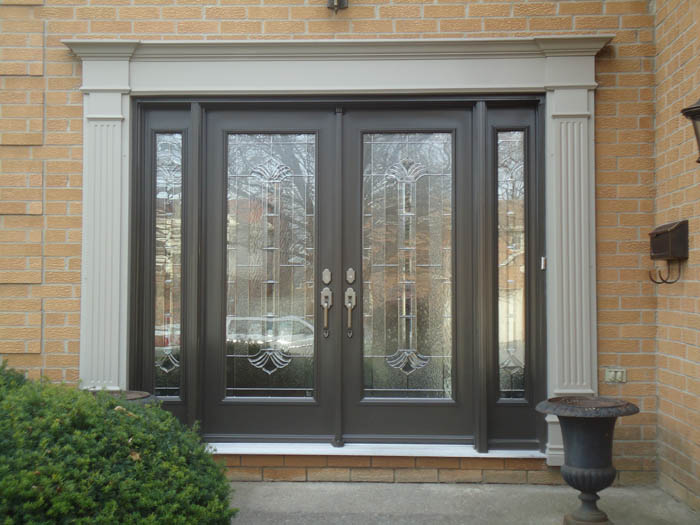
Can be paired with decorative glass, glass inserts, and decorative panels that can mimic wood, but steel doors can be painted and still offer fewer design options than fibreglass
Smooth surface takes paint well for bold colour choices, with painted finishes especially strong for solid colours; steel doors tend to suit crisp, modern looks best
Steel Door Pros and Cons
Pros:
Lowest cost of the three materials
Good energy efficiency compared to old wood doors, especially with an insulated core
Easy to repaint
Cons:
Can dent if struck hard
If the finish is chipped or deeply scratched, the exposed metal can rust if not touched up
Shows wear faster in busy households
Conducts outdoor temperatures more readily, so it can build up heat in summer and feel colder in extreme cold, though a well-insulated steel door can still deliver solid energy performance (check manufacturer warranty)
Best Uses for Steel Doors
When price is the top priority
For secondary entrances like side doors or garage entry doors
For front entrances that are sheltered by a deep porch
Choose steel when you're on a tight budget and the opening is sheltered or secondary; a basic steel door on a solid frame is hard to beat
Fibreglass Entry Doors: Tough and Built to Look Like Wood
Fibreglass Door Features
Two main styles: smooth and woodgrain; fibreglass front doors are popular because they combine beauty with low maintenance
Smooth fibreglass: Looks like a painted steel door; its thick, compression-moulded skin helps resist everyday wear, dents, and moisture damage, and it does not rust, rot, or absorb moisture
Woodgrain fibreglass: Realistic wood appearance with woodgrain texture, can mimic wood grains like cherry and oak, and offers customizable finishes that can be stained like wood
Handles heavy rain, humidity, and freeze-thaw cycles without swelling or rusting
Fibreglass Door Pros and Cons
Pros:
Resists dents and won’t rust or rot
Minimal maintenance required
Excellent weather resistance
Available in many styles and finishes
Cons:
Higher price, especially for woodgrain styles
Cheaper models can look plastic up close
A very sharp blow can crack it (rare in residential use)
Stained finishes may fade over many years in direct sun
Best Uses for Fibreglass Doors
Front entrances exposed to the weather
Homes with pets or busy kids
When you want the look of wood without the upkeep
When long-term durability and low maintenance are priorities then choose fibreglass if you want fibreglass entry doors that typically last longer than steel and are less likely to show day-to-day impact damage.
Which Door Is More Secure?
Neither material is automatically more secure. In practice, fibreglass and steel doors can both be a secure option when paired with reinforced frames, quality locks, and proper installation, and fibreglass doors can be secure with reinforced frames and locks. Steel is harder to break through and provides excellent security, but the frame, lock, strike plate, and installation matter more than the slab material. Most break-ins happen because doors are left unlocked, not because intruders defeat the slab material.
Good home security starts at the frame
Reinforced frames or strike plates with long screws are recommended
Pair with a quality deadbolt
Installation quality is crucial to security effectiveness
Steel can provide extra minutes of protection in an exterior fire
Wood Doors: When You Want the Real Thing
The main reason to choose a wood door is authenticity. Oak or mahogany gives you a rich, high-end look that fibreglass gets close to but can't fully match. For a heritage home in Unionville or a custom build, real wood can be the right call.
Fibreglass vs Wood Door: Which Is Better in Ontario?
Fibreglass handles Ontario weather better than wood
Wood doors absorb moisture and can swell or shrink with seasonal changes
Wood requires regular maintenance (staining and sealing)
Woodgrain fibreglass is a popular compromise for those who want the wood look without the upkeep
Which Door Has the Best Energy Efficiency?
Modern steel and fibreglass doors can both be strong energy efficient options, and the gap in performance is usually smaller than shoppers expect.
Fibreglass doors are typically more energy-efficient than steel because steel conducts heat roughly 40 times faster, and fibreglass doors often have thicker construction for better insulation, giving them excellent insulation that can help reduce heating and cooling costs
Both use insulated foam cores, and good steel doors still commonly land around R-5 to R-6
Glass, weatherstripping, threshold, and frame all affect energy efficiency
ENERGY STAR certified doors are recommended
Proper installation is as important as the material
If you're also planning insulation or other energy upgrades, an ENERGY STAR door may qualify for $100 per opening through Ontario's Home Renovation Savings Program. It requires a home energy assessment and at least two upgrades done together, and it's scheduled to end November 30, 2026.
What to Expect When Replacing a Door in an Older Home
Many Markham homes date from the 1970s and 1980s, and their original door openings don't always match today's standard sizes, which can add installation complexity and make professional installation more important. Over 40 years, a house settles, and a frame that started square often isn't anymore. A new door forced into an out-of-square opening will bind or leave gaps no matter what it's made of, as you can see in many of our local home exterior renovation examples in Markham.
Check the sill and the bottom of the frame before quoting
Years of snowmelt and road salt can rot the wood under an old threshold
Brickmould (trim around the outside of the frame) often needs replacing
Professional installation ensures a proper fit and seal
Which Door Material Lasts Longer?
In fibreglass vs steel entry doors, both can perform very well for durability and insulation, but they behave differently under stress and weather exposure. Fibreglass usually offers the best long-term durability and typically lasts longer than steel because it won’t rust or rot in harsh weather; steel can dent and may rust if the finish is damaged, which is the main reason fibreglass often lasts longer. Steel can last just as long if you keep up with touch ups, while wood lasts only as long as you keep it sealed. Fibreglass doors often carry a longer warranty on the slab too, though that varies by maker. In practice, weatherstripping and hardware wear out long before a good door slab does.
How Do I Know What My Front Door Is Made Of?
Use a fridge magnet: if it sticks firmly, the door is most likely steel
If it doesn't stick, the door is fibreglass or wood
Check the top or bottom edge of the door for visible inner layers
The maker's label is often on the hinge edge of the door
How to Keep Your Entry Door Looking New
Care Tips for Steel Doors
Wash with mild soap and water a couple of times a year
Touch up any chips or scratches right away to prevent rust
Check the weatherstripping every fall
Avoid using a pressure washer
Care Tips for Fibreglass Doors
Regular cleaning with mild soap and water is usually all fibreglass doors need a couple of times a year
Minimal maintenance required
Check the weatherstripping every fall
Avoid using a pressure washer
Care Tips for Wood Doors
Regularly clean with a damp cloth
Re-stain and seal every few years to prevent fading and weathering
Check the weatherstripping every fall
Avoid using a pressure washer
Does a New Front Door Add Resale Value?
A new front door can improve your home's curb appeal and first impression, and a well-designed entrance system in Markham can deliver a strong return on investment, but how much of the cost you get back at resale depends on your market. The best-known study, the 2025 Cost vs. Value Report from Zonda, estimated that a steel entry door replacement added about $5,270 in resale value on a $2,435 job, or about 216% of its cost. That report covers U.S. markets only, so treat it as a rough guide rather than a number to count on in Ontario.
What Is the Best Material for a Front Entry Door?
The best material for most front entry doors is fibreglass, because it gives you the best mix of durability, style, and energy efficiency for the price. For a front entrance, it’s the smart choice if you want the best all-round performance. Many homeowners still go with steel, and for the right entry that's a perfectly good choice. Here's how I'd sum it up:
Pick steel if budget comes first, your entry is covered, or it's a side or garage door; many homeowners still choose it for the lower upfront price.
Pick fibreglass if your door faces the weather or you want a low maintenance wood look; the extra cost can make sense for an exposed main entry because fibreglass is typically more energy-efficient than steel.
Pick wood if you want the real thing and don't mind refinishing it every few years.
Get Help Choosing the Right Door
The right door depends on your home and how your family uses the entry. Edmunds has been handling door installation and other materials and exterior work in Markham since 1947, and every door we install is custom-fitted to your opening.
Want to see steel and fibreglass side by side? Visit our showroom at 3400 14th Ave, Unit #28 in Markham, or call us at 905-472-0276. You can also learn more about our door installation services in Markham and book a free estimate. We're happy to help with any other roofing or renovation questions too.

Steve Gibson
President & CEO, Edmunds Home Improvements
Steve Gibson has over 35 years of hands-on experience in home renovation across
Markham and the Greater Toronto Area. As President and CEO of Edmunds Home
Improvements — a company serving the community since 1947 — Steve specializes in
roofing installation and repair, siding, window replacement and installation, and
door installation. A longtime local resident, he took ownership of Edmunds in 1989
and has built the company into one of the GTA’s most trusted exterior renovation
contractors. Edmunds is fully insured (WSIB and $5 million public liability) and
is a BBB Accredited Business and ENERGY STAR partner.
- Roofing installation and repair
- Siding installation
- Window replacement and installation
- Door installation
- Eavestrough and soffit installation
- Exterior home renovation (Markham, ON and Greater Toronto Area)
3400 14th Ave, Unit #28,
Markham,
ON
L3R 0H7