
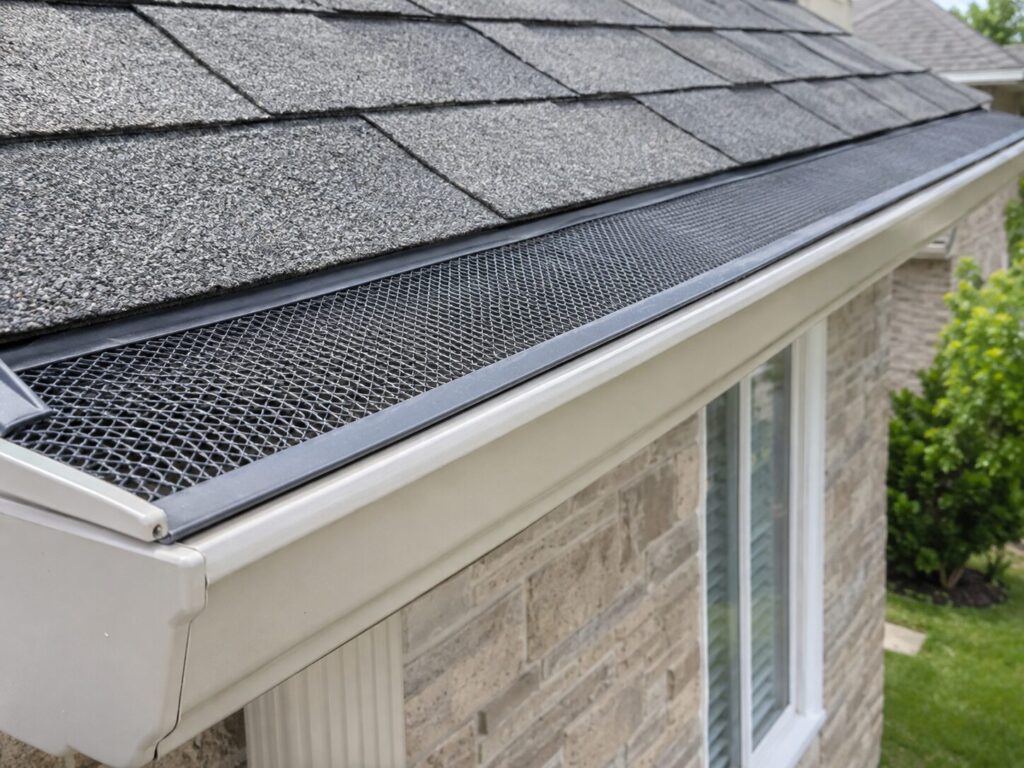
Yes, eavestrough guards work for most Markham homes with trees nearby. They help cut down on cleaning and clogged gutters, which protects your home from water damage, though you’ll still have a little upkeep. For those who don’t know, eavestrough guards are protective covers installed over eavestroughs that allow rainwater to flow through while blocking solid debris. You’ll also hear these called gutter guards, leaf guards, gutter screens, or eavestrough covers. They all do the same job.
The type you pick and how well it’s fitted matter more than the brand on the box. I’ve been on Markham roofs since 1989, and I’ve seen good guards save homeowners a lot of ladder time. I’ve also pulled cheap plastic screens out of eavestroughs packed solid with maple keys.
This guide is for Markham homeowners considering eavestrough guards. Below I’ll go through which types hold up in York Region weather, what they cost, pros/cons, and when I’d tell you to save your money.
Do Eavestrough Guards Actually Work?
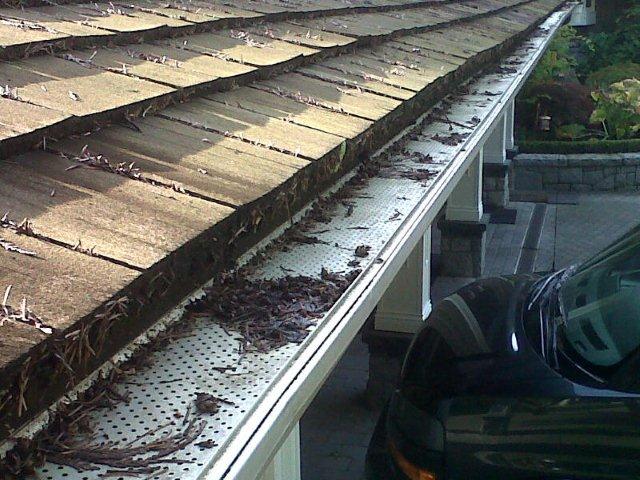
Eavestrough guards do work. A good gutter guard system blocks debris like leaves and seed pods while allowing water to drop through into the trough and out the downspout, which means fewer clogs and less time on a ladder.
In a November 2025 survey of 1,000 US homeowners by This Old House, 68% of people with gutter guards were very satisfied with how well their guards kept debris out, and another 26% were somewhat satisfied. That lines up with what I see in Markham. The homeowners who end up unhappy usually bought the wrong type for their nearby trees or had guards clipped onto eavestroughs that already sagged and leaked.
Gutter Guards vs. Eavestrough Guards: Is There a Difference?
There’s no difference between gutter guards and eavestrough guards. In Canada we call the trough an eavestrough, and in the US it’s a gutter, so product labels on store shelves here use both words.
Two names can trip you up. LeafGuard and Gutter Helmet are both brand names as well as general terms. When a salesperson says “leaf guard,” ask whether they mean the product type or their own system.
The Main Types of Gutter Guards
Gutter guards fall into four main designs, and they behave very differently once a Markham winter hits. Here are the gutter guard options you’ll run into and how each one holds up.
Micro Mesh Gutter Guards
Micro mesh gutter guards use a fine stainless steel screen stretched over a rigid aluminum frame that screws to the front lip of the eavestrough. The holes are small enough to stop pine needles and most roof grit while still letting heavy rain flow freely into the trough. The mesh is usually ridged, so lighter leaves dry out and blow off instead of sitting flat.
The catch is that heavier debris like maple keys and pine cones can sit on top of the mesh and form a mat. A quick brush or hose-down once a year usually takes care of it.
Perforated Aluminum and Gutter Screens
Perforated aluminum guards and basic gutter screens are flat panels with holes or slots. They’re cheap and easy to snap in, and they stop larger debris like whole leaves and twigs.
The bigger holes let smaller debris through, though. Pine needles slide in point first, and maple keys wedge into the slots. Plastic gutter screens are the weakest of the bunch. They go brittle in our cold and can lift in high winds if they aren’t secured properly.
Reverse-Curve and Solid Covers
Reverse-curve guards, sometimes called solid covers or helmet-style covers, cover the whole trough with a curved edge at the front. Water clings to that curve and follows it into a narrow slot, while leaves slide off onto the lawn. Installers call these surface tension systems.
They handle big maple and oak leaves well. In heavy rain, though, water can shoot right past the curved edge, especially on a steep roof pitch. They also need to be lined up carefully with your roof design to work at all.
Foam Inserts and Brush Guards
Foam inserts and brush guards sit inside the eavestrough instead of on top. Foam inserts are wedge-shaped blocks that water soaks through, and brush guards are cylindrical brushes that fill the channel, blocking larger debris but allowing smaller debris to settle inside.
Both are the cheapest gutter protection you can buy, and both have the same problem. Fine debris gets trapped inside them, so they stay wet, and foam can trap moisture and lead to mold as well as moss or even seedlings. Foam also starts to break down in sun and frost, and most of the foam I’ve pulled out was done after two or three seasons.
Which Type of Gutter Guard Works Best in Markham?
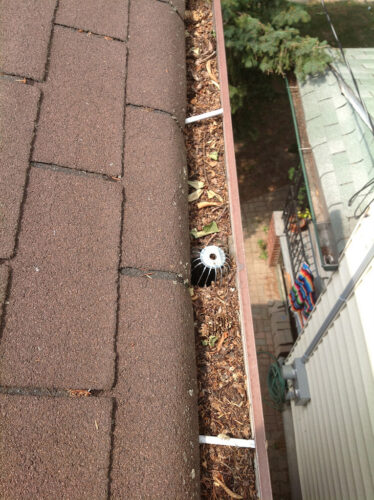
Stainless steel micro mesh on an aluminum frame, screwed down, works best on most Markham homes. It handles the full year of debris we get here, blocking leaves and debris from entering the gutters while filtering debris out of the water path.
Maple and Pine Debris in Markham
Silver and red maples drop their keys in spring. Norway and sugar maples, which line a lot of Markham streets, drop theirs in fall along with the leaves. If you have spruce or pine near the house, needles come down all year.
Micro mesh keeps all of that out of the trough while water still flows through the guard, preventing clogs where standing water starts. Perforated aluminum is a fair budget option if your yard has mostly deciduous trees and no evergreens close to the house.
Choosing a Guard for Your Home
A tighter-fitting system usually means less maintenance, less regular gutter cleaning, and a lower risk of water damage at the foundation. The best choice depends on the trees around your home and how much upkeep you want to handle.
Do You Still Have to Clean Gutters With Gutter Guards?
Yes, you still have to clean gutters with gutter guards on, but many homeowners drop to about once a year, and the job gets a lot easier. Debris that doesn’t wash off builds up on top of the guard, and the downspouts still need a look.
With good guards, cleaning means brushing or hosing the top of the screen and checking that each downspout runs clear. That’s much less mess than gutter cleaning on an open trough, where you’re scooping out wet leaves by the handful, and it cuts down on routine maintenance.
I’d still do a quick walk-around check in spring and again in late fall to make sure water is moving, which also lines up with Government of Canada guidance to inspect eavestroughs at least twice a year.
One thing to know before you buy: if something does get under the guards, it takes longer to clean underneath. The guards have to come off, the trough gets cleaned, and they go back on. Cleaning companies charge more for that.
Do Eavestrough Guards Stop Ice Dams?
No, eavestrough guards don’t stop ice dams. Ice dams start higher up, on the roof itself.
Heat leaking from the house into the attic warms the roof and melts the snow sitting on it. That meltwater runs down to the cold overhang and freezes again, building a ridge of ice that backs water up under the shingles. Gutter guards can’t change that. Snow can actually sit on top of a mesh guard and freeze there, and heavy ice can bend cheaper guards.
The real fix is better attic insulation and ventilation. I explain how that works in our guide to how attic ventilation works.
What Are the Downsides of Gutter Guards?
The biggest downside of gutter guards is the upfront cost, followed by the fact that they still need some maintenance. Here are the other problems I see most often.
Common Gutter Guard Issues
Seeds and roof grit can pile up on top of the guard and slow water flow.
In heavy rain, reverse-curve guards can let water overshoot the trough.
Cheap plastic screens can crack in the cold or lift in high winds.
A clog underneath is harder and more expensive to clear, increasing maintenance time and service cost.
Guards on old, sagging eavestroughs can hide the real problem.
Picking the right type for your trees avoids most of these issues.
How Much Do Eavestrough Guards Cost in Markham?

Professional Installation Costs
Professionally installed eavestrough guards in Ontario usually run about $8 to $18 per linear foot, depending on the type. Basic perforated aluminum sits at the low end of those price points, and a premium gutter guard with stainless micro mesh sits at the high end. National brands often quote well above this range, so get more than one price.
A typical detached Markham home has somewhere between 120 and 200 feet of eavestrough. At those rates, professional gutter guard installation comes to roughly $1,000 to $3,600 for the whole house. Two-storey homes and steep roofs push the price up.
DIY Guard Costs
If you’re doing it yourself, big-box stores in Canada sell snap-in plastic and aluminum screens for a few dollars per 3 to 4 foot piece. Stainless micro mesh kits run about $100 to $300 for 48 to 100 feet.
Compare that against what you pay for gutter cleaning now. If you’re paying someone to deal with clogged gutters twice a year, good gutter guards are often cost effective within several years. If your only problem is the downspouts plugging, a few dollars’ worth of downspout strainers might be all you need.
Can Gutter Guards Go on Existing Gutters?

Yes, most gutter guards can go on existing gutters, as long as those eavestroughs are in good shape and the full gutter system is draining properly. Before you install guards, check for sagging runs, leaking seams, loose hangers, and water pooling instead of running toward the downspout.
Gutter guards add a bit of weight, and snow adds more, so the trough and the fascia behind it need to be solid. The fascia is the board along your roof edge that the eavestrough screws into. If yours is soft or rotting, deal with that first.
Our post on why you can’t neglect your soffit and fascia explains what to look for.
If your eavestroughs are 20 to 25 years old and already sag or leak at the seams, replacing them and adding guards in one visit often makes sense. We install 5-inch eavestroughs on most homes and 6-inch on larger ones, and we can fit leaf guard screens at the same time. You can read more on our eavestrough installation page.
Should You Install Gutter Guards Yourself?
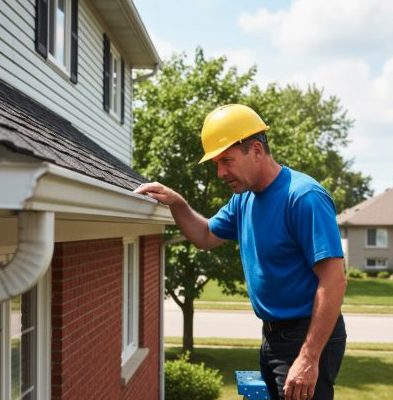
You can install gutter guards yourself on a bungalow with a gentle roof pitch and snap-in screens. There are some DIY options that suit that kind of straightforward setup. On a two-storey house, or with micro mesh that needs to be lined up and screwed to the eavestrough, I’d lean toward professional installation, especially on complex roof layouts.
DIY vs. Professional Installation
DIY installation may suit you if:
You have a bungalow with a gentle roof pitch.
You’re installing straightforward snap-in screens.
Professional installation is a better fit if:
Your home is two storeys or has a complex roof layout.
You’re installing micro mesh that needs to be lined up and screwed to the eavestrough.
You want an installer to check for sagging runs or soft fascia before covering them up.
Ladder falls are the real risk when installing gutter guards. Fit matters too, and professional installation helps ensure gutter guards are fitted properly. Gaps at corners and end caps let other debris in, and improper installation can reduce performance and create drainage problems if a guard is set at the wrong angle and sends water over the front.
A good installer will also flag sagging runs or soft fascia before covering them up. That kind of high-quality work can cut down on maintenance issues over time and help the guards last longer.
Watch for any guard that tucks under your bottom row of shingles. Some reverse-curve covers and some micro mesh kits install that way. Shingle makers like GAF say their warranty doesn’t cover damage caused by gutter covers, so I’d stick with guards that attach to the eavestrough itself.
Before you sign with anyone, ask:
What is the screen made of?
Where does it attach?
What warranty covers the product and the labour?
How Long Do Micro Mesh Gutter Guards Last?
Stainless steel micro mesh gutter guards on an aluminum frame usually last 15 to 20 years or more when they’re installed properly. Stainless resists rust, and a rigid frame holds its shape under snow.
Plastic gutter guards last a few years before they go brittle, and foam inserts often need replacing after two or three seasons. If you want a durable, high-quality system that won’t need replacing for a long time, it’s worth paying for metal.
Are Gutter Guards Worth It for Your Home?

Gutter guards are worth it if trees hang over your roof or if you can’t safely clean a second-storey eavestrough. For most homeowners, the main benefit is reducing maintenance and ladder work, not just appearance. The short answer for a house with no mature trees nearby is usually no.
That split shows up all over Markham. Homes in older areas like Unionville and Markham Village often sit under big maples and oaks that fill eavestroughs every fall. Many homes in newer neighbourhoods like Cornell or Cathedraltown have young street trees that drop very little, and a spring and fall check is enough. Low-profile guards that are professionally fitted can also improve a home’s curb appeal.
Gutter Guards Are Probably a Good Fit If:
Mature trees overhang your roof or sit within a few metres of the house.
You have evergreens dropping needles near the eaves.
Your eavestroughs overflow during heavy rain because of clogs.
You’ve had basement leaks or water pooling along the foundation.
You don’t want to be on a ladder, or can’t safely be.
Proper drainage protects your foundation from costly water damage, so whatever you decide, keep your eavestroughs and downspouts in good repair.
Get Your Eavestroughs Checked by Edmunds
If you’re not sure whether eavestrough guards make sense for your home, we’ll come take a look. We’ll check your eavestroughs and fascia and tell you honestly whether guards will help or whether your money is better spent elsewhere.
Call us at 905-472-0276, visit edmundshomeimprovements.com, or drop by our showroom at 3400 14th Ave, Unit 28, Markham, to book a free assessment.

Steve Gibson
President & CEO, Edmunds Home Improvements
Steve Gibson has over 35 years of hands-on experience in home renovation across
Markham and the Greater Toronto Area. As President and CEO of Edmunds Home
Improvements — a company serving the community since 1947 — Steve specializes in
roofing installation and repair, siding, window replacement and installation, and
door installation. A longtime local resident, he took ownership of Edmunds in 1989
and has built the company into one of the GTA’s most trusted exterior renovation
contractors. Edmunds is fully insured (WSIB and $5 million public liability) and
is a BBB Accredited Business and ENERGY STAR partner.
- Roofing installation and repair
- Siding installation
- Window replacement and installation
- Door installation
- Eavestrough and soffit installation
- Exterior home renovation (Markham, ON and Greater Toronto Area)
3400 14th Ave, Unit #28,
Markham,
ON
L3R 0H7