Understanding how attic ventilation works is not just for contractors. The decisions that affect your attic, like how insulation is installed, whether soffit vents are clear, or whether a ridge vent was added without matching intake vents, are ones homeowners make every day, often without realizing it. This guide covers what attic ventilation is, the two primary methods, common vent types, why a balanced system matters for Markham homes specifically, and the warning signs that something is off.
We’ll explain how attic ventilation works, why it matters, and what every Markham homeowner should know about keeping their attic properly ventilated. Whether you are buying an older home, planning a renovation, or just trying to understand why your energy bills keep climbing, this article covers the basics of attic ventilation and points you toward the things that actually make a difference in our climate.
What is Attic Ventilation and How Does it Work?
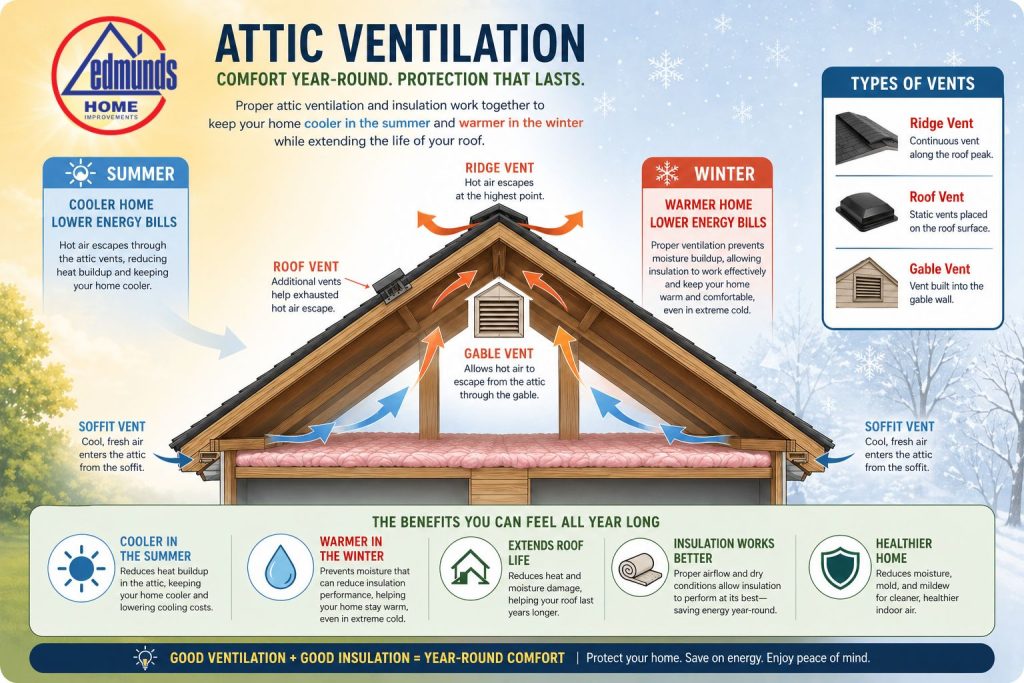
Attic ventilation is the system that moves air through the space between your ceiling and your roof. It works by allowing cooler outdoor air to enter through intake vents located at the soffits, while warm, humid air escapes through exhaust vents positioned at the peak or ridge of the roof, creating a continuous flow of air.
Why Attic Ventilation Matters
Most homes use a passive ventilation system relying on natural convection to facilitate this process. This movement of air is what keeps attic temperatures and moisture levels under control through every season.
Without adequate ventilation and airflow, heat and moisture build up. In summer, attic temperatures can climb high enough to damage roofing materials and push radiant heat down through your ceiling. In winter, warm air escaping from your living space condenses on cold roof surfaces, creating conditions for mold, wood rot, and ice dams along the eaves. Proper attic ventilation addresses both problems using the same basic airflow principle.
How Air Circulation Works
As air moves through the attic, air circulation and air movement are essential for maintaining attic health, enhancing energy efficiency, and preventing moisture buildup. This balanced flow helps protect your roof and home from long-term damage.
Key Terms at a Glance
Soffit vent | An intake vent installed in the underside of the roof overhang. Draws cool outdoor air into the attic at the lowest point of the space. |
Ridge vent | A continuous exhaust vent running along the peak of the roof. Allows warm, humid air to escape at the highest point where heat collects. |
Gable vent | A vent in the triangular wall section at each end of the attic. Works as exhaust (or limited intake/exhaust) depending on wind direction. |
Static ventilation | Passive airflow driven by natural convection. No power needed. Most homes rely on this method. |
Mechanical ventilation | Powered fans (electric or solar) used to actively move air when passive ventilation is insufficient. |
Insulation baffle | A channel installed between rafters that keeps insulation from blocking soffit vents. |
There are two main methods used to best achieve proper attic ventilation. An effective ventilation system is crucial to ensure your attic performs as intended and maintains the integrity of your home.
The Two Primary Methods of Attic Ventilation
There are two primary methods used to ventilate attics: static ventilation and mechanical ventilation. Most homes rely on static ventilation, which depends on natural convection (a form of heat transfer) to move warm air through the attic space.
Static Ventilation (Passive)
Static ventilation relies on natural convection, allowing air to flow through the attic space without any mechanical assistance. Outside air (fresh air) enters through intake vents, such as soffit vents at the eaves, while hot air exits through exhaust vents at the ridge.
Warm air is lighter than cool air, so it rises naturally toward the peak of the attic and exits through these exhaust vents. As that hot air leaves, cooler outside air is drawn in to replace it. This cycle runs continuously without any power or moving parts.
For static ventilation to work, the system needs both intake and exhaust vents, and they need to be roughly balanced. Static ventilation helps remove excess heat and excess moisture from the attic, preventing problems like high attic temperatures, mold, and condensation.
A roof with only exhaust vents has nothing drawing air in consistently. A roof with only intake vents has nowhere for the warm air to go. Both components are required.
Mechanical Ventilation (Active)
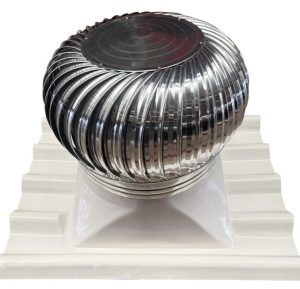
Active or mechanical ventilation uses electric or solar-powered fans when passive methods fall short. These systems increase air movement in the attic by actively drawing air out, which helps maintain balanced ventilation and prevents moisture buildup.
These fans are installed near the ridge or peak of the attic and draw air out more aggressively than convection alone. Mechanical ventilation can be useful in homes with complex roof geometry, such as hip roofs with short or no ridge lines, where passive airflow is naturally limited.
The tradeoff with mechanical ventilation is that powered fans create negative pressure in the attic. If the attic floor is not perfectly sealed from the living space below, that negative pressure pulls conditioned air up from the house rather than drawing in outdoor air.
This is why powered attic fans fell out of favour in many climates, and why a well-designed passive system outperforms them in most standard homes. Mechanical ventilation systems must be properly installed to avoid issues and ensure they work effectively.
How Attic Airflow Works: Step by Step Overview
Attic ventilation works by allowing cooler outside air to enter through intake vents located at the soffits, while warm, humid air escapes through exhaust vents positioned at the peak or ridge of the roof. This setup creates a continuous flow of air that helps regulate temperature and moisture levels in the attic.
The Airflow Process
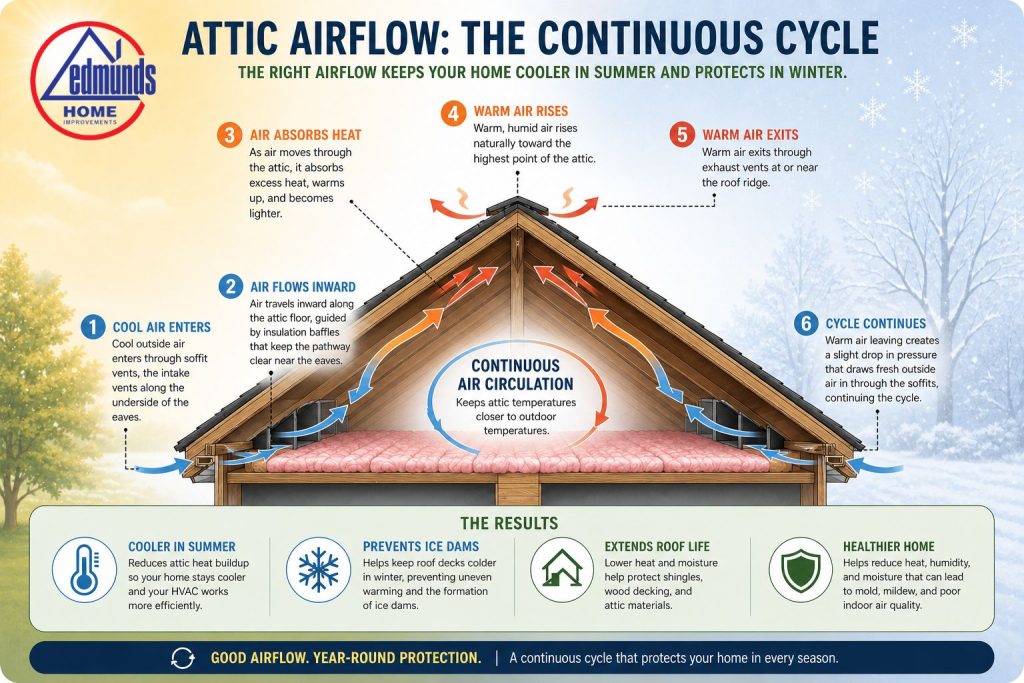
In a static system, air moves through the attic in a predictable path. Here is how roof ventilation works from start to finish:
Cool outside air enters through soffit vents, which serve as intake roof vents along the underside of the roof eaves.
The air travels inward along the attic floor, channeled by insulation baffles that keep the pathway clear near the eaves.
As the air circulates, it absorbs excess heat from the attic space, warming and becoming lighter.
Warm, humid air rises naturally toward the highest point of the attic.
The warm air exits through exhaust roof vents positioned at or near the roof ridge.
The outgoing air creates a slight drop in pressure that draws fresh outside air in through the soffits, continuing the cycle of air circulation.
This continuous loop of air circulation keeps attic temperatures closer to outdoor temperatures in summer and helps prevent the uneven warming of the roof deck in winter that leads to ice dams.
Why Balance Matters
A balanced system, where intake vent area equals or slightly exceeds exhaust vent area, is essential for removing excess heat and excess moisture, promoting attic health and energy efficiency.
Types of Attic Vents
Common types of attic vents include soffit vents, ridge vents, gable vents, and turbine vents, each serving specific roles in maintaining airflow and temperature balance in the attic.
Roof vents not only provide essential airflow but also help prevent pests from entering the attic by using screens and proper placement. Here is what each one does and where it fits in the system:
Proper insulation and roof ventilation work together to maintain a healthy attic environment, preventing moisture buildup and improving energy efficiency, and well‑maintained soffit and fascia systems are a key part of keeping that airflow path open.
Soffit Vents (Intake)
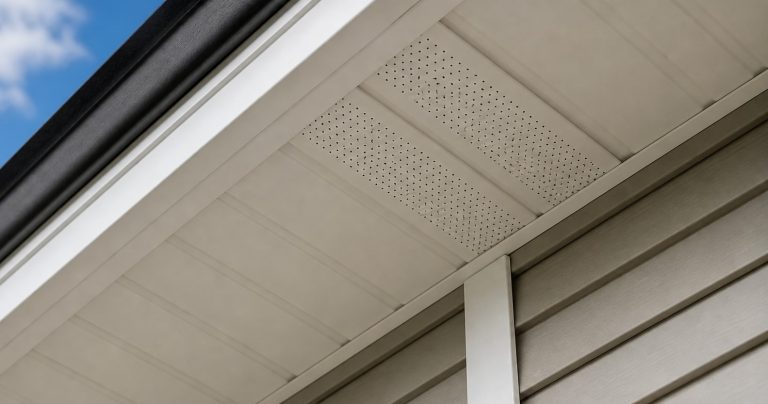
Soffit vents are installed in the underside of the roof overhang, right along the outer edge of the eaves. They are the intake side of the ventilation system, allowing fresh outside air to enter the attic and support proper ventilation.
Continuous soffit vents that run the full length of the eave provide more consistent airflow than individual round or rectangular vents spaced apart. For soffit vents to do their job, the pathway into the attic must stay clear of insulation.
Ridge Vents (Exhaust)
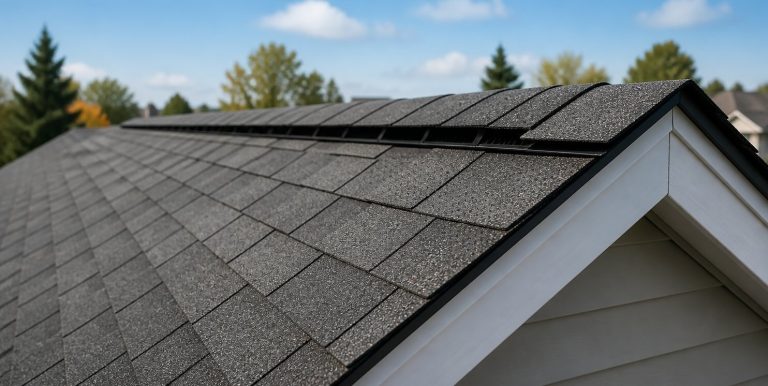
A ridge vent runs along the entire peak of the roof and is covered by the cap shingles, so you may not even notice it is there. It provides a long, continuous exhaust opening right where the hottest air collects, allowing hot air and excess heat to escape from the attic.
Ridge vents are generally the most effective passive exhaust option for most homes, and they work best when paired with continuous soffit vents to create a full intake-to-exhaust flow path.
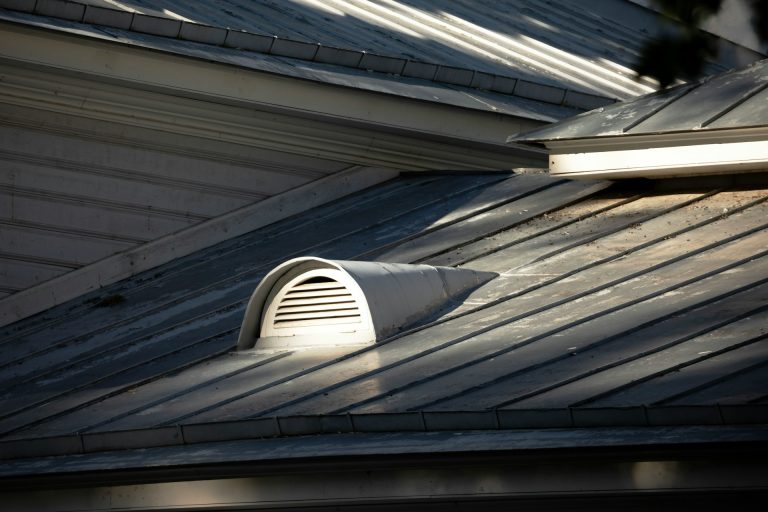
Gable Vents (Exhaust or Cross-Ventilation)
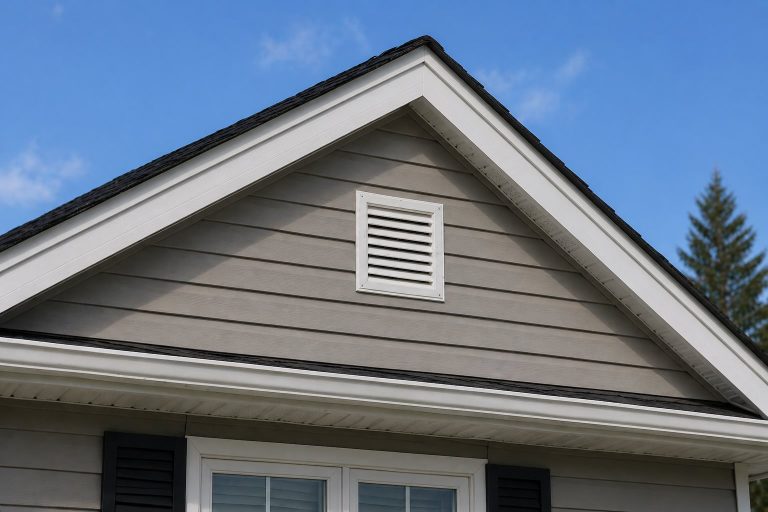
Gable vents are installed in the triangular wall sections at each end of the attic. When used alongside soffit vents, they serve as exhaust vents and provide decent cross-ventilation.
Gable vents can enhance air movement and air circulation, especially when combined with other vent types, promoting better energy efficiency and moisture control. On their own, they depend on wind direction and do not provide the consistent airflow of a full soffit-to-ridge system.
Many older Markham homes with gable vents alone are underventilated without the homeowner knowing it.
Static Vents and Turbine Vents (Exhaust)
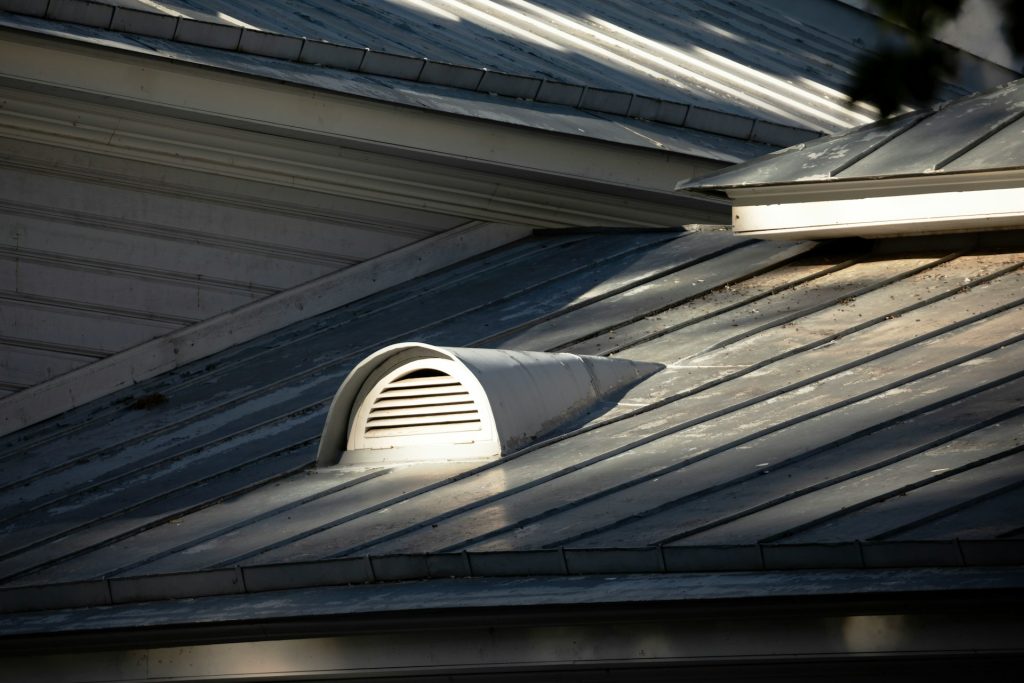
Static vents, also called box vents or roof louvers, are fixed openings installed on the roof surface below the ridge. They provide exhaust ventilation but cover less area than a continuous ridge vent, so you typically need several of them to match the exhaust capacity of a ridge vent.
Turbine vents use wind energy to spin and actively draw air out. Both are common on older homes and still work well when properly sized. Static and turbine vents contribute to an effective ventilation system by promoting balanced air movement, which is essential for maintaining proper attic ventilation.
Quick Comparison of Vent Types
Here is a summary of the four main vent types and their roles in roof ventilation. All vent types contribute to effective roof ventilation, and roof vents are essential for maintaining proper airflow and preventing issues like moisture buildup and pest intrusion:
• Intake. Soffit vents
• Exhaust. Most effective passive option for most homes. Ridge vents
• Exhaust or cross-ventilation. Less consistent without soffit vents. Gable vents
• Exhaust. Fixed openings; need multiples to match ridge vent coverage. Static (box) vents
• Exhaust. Wind-powered; good supplement where passive flow is limited. Turbine vents
Why Proper Attic Ventilation Matters for Markham Homes
Markham sits in a climate zone with genuinely hot, humid summers and cold winters with significant snowfall. Proper attic ventilation not only protects your home from seasonal extremes but also improves energy efficiency and helps control heating costs.
That combination puts attic ventilation under stress in both directions, making it especially important during the summer heat and winter months. Here is what proper ventilation protects against in each season.
Preventing Ice Dams in Winter
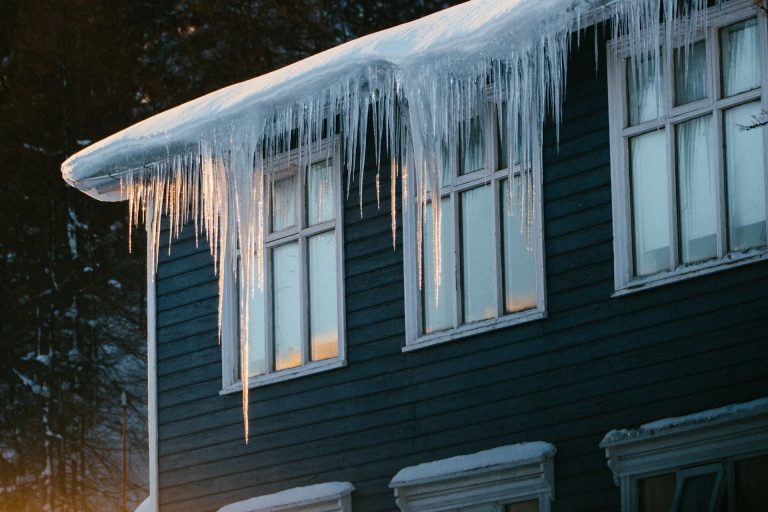
Ice dams form when heat escaping from the living space below warms the roof deck unevenly, and understanding ice dam causes, removal, and prevention is essential for Markham homeowners dealing with snowy winters.
Ice accumulation and melted snow during the winter months contribute to ice dam formation, as the snow near the ridge melts first and the meltwater runs down toward the eaves, which also shortens overall roof lifespan in Markham’s climate if it is not addressed.
At the cold outer edge of the roof, it refreezes into a ridge of ice. As more water backs up behind that ice dam, it gets pushed up under the shingles and can work its way into your ceiling, walls, and insulation.
A properly ventilated attic stays cold and consistent in winter, keeping the roof deck at a uniform temperature so that uneven melting does not happen and helping maximize overall roof lifespan for Markham homeowners facing repeated freeze–thaw cycles.
Managing Heat and Moisture in Summer
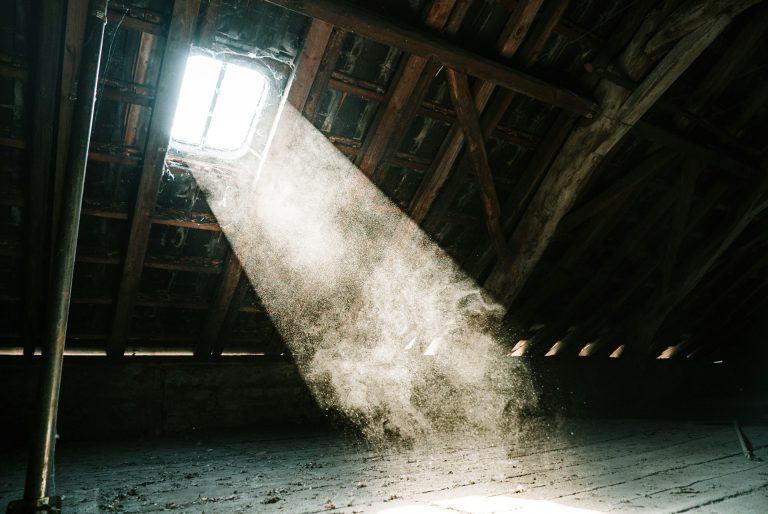
An unventilated attic in summer can exceed 65 degrees Celsius on a hot day, as summer heat leads to the buildup of excess heat and excess moisture in the attic, which is why professional roofing services in Canada often focus on both ventilation design and proper installation.
That kind of heat buildup warps the roof sheathing, degrades shingles from the underside, and pushes radiant heat down through the ceiling into your living space. Your air conditioner ends up working against the heat radiating through the ceiling as much as the heat coming through the windows, which drives up your energy bills through July and August.
Reducing Energy Costs
A well-ventilated attic takes pressure off your HVAC system in both seasons. In summer it reduces the heat load on your air conditioner. In winter it prevents the heat loss that happens when warm conditioned air is drawn into an inadequately sealed attic.
Improved energy efficiency and lower heating costs are direct benefits of proper attic ventilation, as it helps regulate attic temperature and reduces the demand on your heating and cooling systems. Over a full year, those savings add up.
Proper attic ventilation is one of the more cost-effective home improvements available when you factor in reduced energy costs and avoided roof repair bills, especially when paired with professional roof installation services in Markham that address insulation, flashing, and vent layout together.
Protecting Structural Integrity
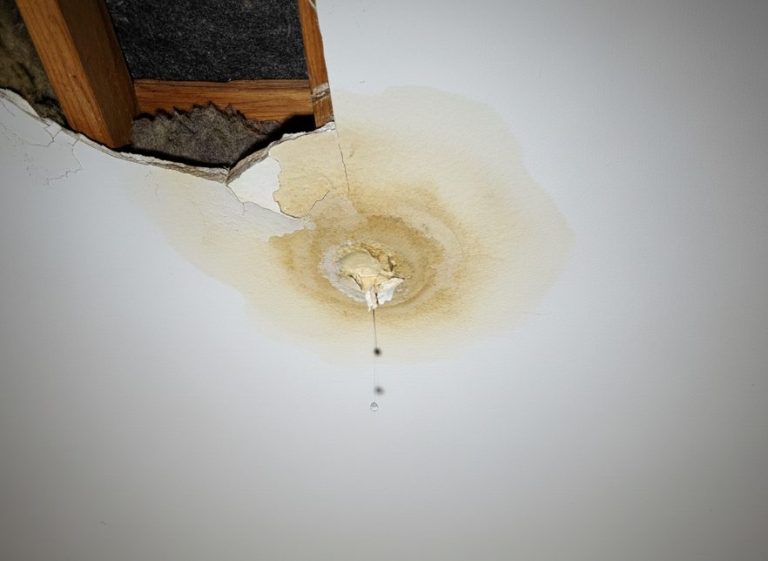
Moisture buildup in an attic creates conditions where mold and mildew thrive. Inadequate ventilation can lead to mold growth and costly repairs due to structural damage, as trapped moisture may cause issues like wood rot, deterioration of supports, and even ice dam formation.
Over time, that moisture leads to wood rot on the roof deck and sheathing, deterioration of the structural supports, and premature failure of the roofing materials above. Replacing decayed sheathing or structural members during a re-roof is significantly more expensive than the repairs would have been if caught early, which is why timely roofing repair services in Markham are so important when you spot early warning signs.
Consistent ventilation keeps moisture levels low and extends the service life of everything from the rafters to the shingles.
Ventilation as Part of a Complete System
Ventilation works best as part of a complete system. A vapor retarder on the warm side of the attic floor insulation, combined with a properly air-sealed ceiling with no gaps around pot lights or the attic hatch, reduces the amount of moisture and warm air that gets into the attic in the first place.
Attic insulation that meets Ontario’s recommended R-values works together with good ventilation rather than replacing it.
Common Attic Ventilation Problems
What Are the Problems with Attic Ventilation?
The most common attic ventilation problems are:
• Missing or blocked intake vents (the most common issue)
• An imbalanced system where exhaust vent area exceeds intake vent area
• Air leaks between the living space and the attic floor
• Ventilation setups that do not meet Ontario Building Code requirements
Any one of these problems reduces the effectiveness of the whole system and can lead to issues such as excess heat, excess moisture, and mold growth, in addition to the heat and moisture damage described above.
Blocked or Missing Intake Vents
Blocked or missing intake vents are the number one issue we come across. Soffit vents get clogged with debris, painted over during renovations, or smothered by attic insulation pushed too close to the eaves.
When intake vents are blocked, air circulation and air movement in the attic are disrupted, preventing the ventilation system from working efficiently. When there is no intake air, adding a ridge vent or additional exhaust vents does not help.
The exhaust vents will not have enough incoming air to pull. Worse, they can draw warm air up from the living space through any ceiling gaps, which adds moisture to the attic instead of removing it.
Over-Ventilation and Imbalance
Over-ventilation happens when exhaust vent area significantly exceeds intake vent area. The pressure imbalance disrupts proper air movement and air circulation, reducing the effectiveness of the entire system.
This causes the system to draw conditioned air from inside the house upward into the attic instead of pulling in outdoor air. This results in energy loss and can contribute to moisture problems as that warm indoor air hits cold attic surfaces, often necessitating professional roofing repair to correct both the ventilation and any related roof damage.
Getting the ratio right matters as much as having vents at all.
Why Don't People Use Attic Fans Anymore?
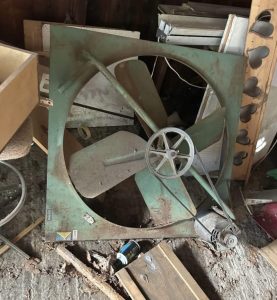
Powered attic fans fell out of favour because research showed they often create more problems than they solve. The fans exhaust air quickly, but if the attic is not perfectly sealed from the living space below, they pull conditioned air up from your home along with the attic air.
You end up paying to cool or heat air that gets vented outside. To maintain energy efficiency, attic fans must be properly installed to prevent unwanted air leakage and increased utility costs.
Modern sealed, properly balanced passive ventilation outperforms powered fans in most homes, with nothing to break or replace. Mechanical ventilation still makes sense in specific situations, particularly in homes with complex hip roof geometry where passive airflow is limited, but it needs to be carefully designed to avoid the imbalance problem, ideally as part of a professional roof installation or upgrade.
Air Leaks Between Living Space and Attic
Air leaks between the attic floor and the living space below are as important as the vents themselves. Gaps around recessed lighting, the attic hatch, plumbing stacks, and wire penetrations allow warm moist air from the living space to migrate into the attic continuously.
These air leaks can introduce excess moisture, which increases the risk of mold growth in the attic. Sealing those penetrations before improving ventilation is the right order of operations. Otherwise you are ventilating a leaking attic rather than a properly sealed one.
Attic Ventilation and Building Codes in Ontario
The 1/300 Rule for Attic Ventilation
The 1/300 rule is the standard most Canadian building codes reference: you need at least one square foot of net free ventilation area for every 300 square feet of attic floor space. Roof ventilation and roof vents are essential for meeting this requirement, as they help maintain proper airflow and comply with code standards.
So a 1,500 square foot attic floor requires at least five square feet of total vent area. That ventilation area should be split roughly evenly between intake and exhaust, with intake equal to or slightly greater than exhaust.
When a proper vapor retarder is installed on the warm side of the ceiling insulation, this 1/300 ratio applies. Without it, some codes require the more generous 1/150 ratio.
What Is the 7 and 7 Rule for a Finished Attic?
The 7 and 7 rule applies to finished attic space rather than unfinished attic ventilation. It means at least 7 feet of ceiling height over at least 7 feet of floor width is required for an attic area to qualify as livable finished space under building codes.
This matters for ventilation because finished attic spaces have different requirements than unfinished attics used for storage. A finished attic is treated more like conditioned living space, and the ventilation approach, insulation placement, and air sealing requirements all shift accordingly.
In finished attic spaces, proper insulation and air circulation are especially important to maintain comfort, prevent moisture buildup, and ensure energy efficiency.
Getting a Professional Inspection
Ontario’s Building Code is updated periodically and local requirements can vary, so looking at recent home improvement projects in Markham can give you a sense of how modern roofing and ventilation details are being implemented.
If your home is older, or if you have had insulation or renovation work done that may have affected the attic, a professional inspection is the most reliable way to confirm your ventilation is adequate and up to current standards, and it is also the right time to check for issues like hail damage roof repair needs in Markham after severe storms.
A professional can also ensure your attic has an effective ventilation system and adequate ventilation to prevent issues like heat buildup and moisture problems. This is especially true if you are buying a home, completing a renovation, or adding attic insulation.
Signs Your Attic Ventilation Needs Attention
Warning Signs of Poor Attic Ventilation
Several warning signs can indicate a ventilation problem before it becomes a costly repair. Watch for:
• Ice dams forming along the eaves in winter
• Unusually high heating or cooling bills without an obvious cause
• Shingles that are aging, curling, or granulating faster than expected
• Peeling or bubbling paint on ceilings near the top floor
• A musty smell near the attic hatch or in upper rooms
• Excessive heat in upper floor rooms during summer
• Excess heat buildup in the attic
• Excess moisture or condensation on attic surfaces
• Mold growth visible on wood or insulation
• Rust on nail heads or metal components inside the attic
• Frost on the underside of roof sheathing in winter
• Dark staining or soft spots on attic wood surfaces
If you notice any of these signs, it is worth having a professional look before the situation gets worse, and working with a trusted roofing contractor in Markham who provides professional roofing services for Canadian homeowners ensures problems are diagnosed and fixed correctly the first time.
Moisture and heat damage in an attic tends to progress gradually, but repair costs can grow quickly once the structural components are involved.
Maintaining Your Attic Ventilation System
Seasonal Inspection Checklist
Attic ventilation systems do not need a lot of active maintenance, but a check in fall and spring goes a long way, and reviewing before‑and‑after exterior renovation examples can help you understand what well‑maintained roofing and venting should look like.
Here is what to look for:
Check soffit vents from outside. You should see vent slots or perforations clearly, with no paint, caulking, or debris blocking them.
Check gutters at the same time. Debris packed in gutters can press against soffits and block airflow.
On the roof, confirm that any static vents or turbine vents are sitting flush and show no signs of damage or blockage.
Inspect roof vents to ensure they are properly screened to prevent pests from entering and that they are not blocked or damaged.
Review overall roof ventilation to confirm there is adequate airflow and that all vent types are functioning as intended.
In the attic, make sure insulation has not shifted toward the eaves and covered the soffit vent openings, and verify that proper insulation is in place to work effectively with your attic ventilation system.

The Insulation Baffle Rule
One thing that catches many homeowners off guard: insulation should never be pushed right up to the outer edge of the attic floor near the eaves. That is where soffit vents pull air in, and if insulation covers that pathway, the airflow stops.
Insulation baffles, the small rafter channels that keep a clear passage between the soffit vents and the rest of the attic space, are a simple and inexpensive fix if your attic does not already have them. These baffles help maintain proper air movement and air circulation from the soffit vents into the attic, supporting effective ventilation.
Keeping Your Markham Home Protected Year-Round
Proper attic ventilation protects your roof system from the inside out. It extends the life of your shingles, reduces the risk of ice dams and moisture damage, keeps your heating and cooling costs in check, and helps maintain the structural integrity of the roof for the long term.
Proper attic ventilation also improves energy efficiency, prevents costly repairs caused by mold, moisture damage, or ice dam formation, and ensures your home’s structure remains sound. For Markham homeowners dealing with both hot summers and cold winters, it is one of the most practical and cost-effective investments you can make in your home.

If you have concerns about your attic ventilation, or if you have noticed any of the warning signs mentioned above, the team at Edmunds Home Improvements is happy to take a look. You can reach us directly through our contact page for free roofing estimates.
We have been serving Markham and the surrounding GTA for years and offer inspections and customized solutions for roofing and home renovation projects of all sizes so give us a call to book a visit. A few minutes of conversation now can save you from a much bigger repair down the road.