
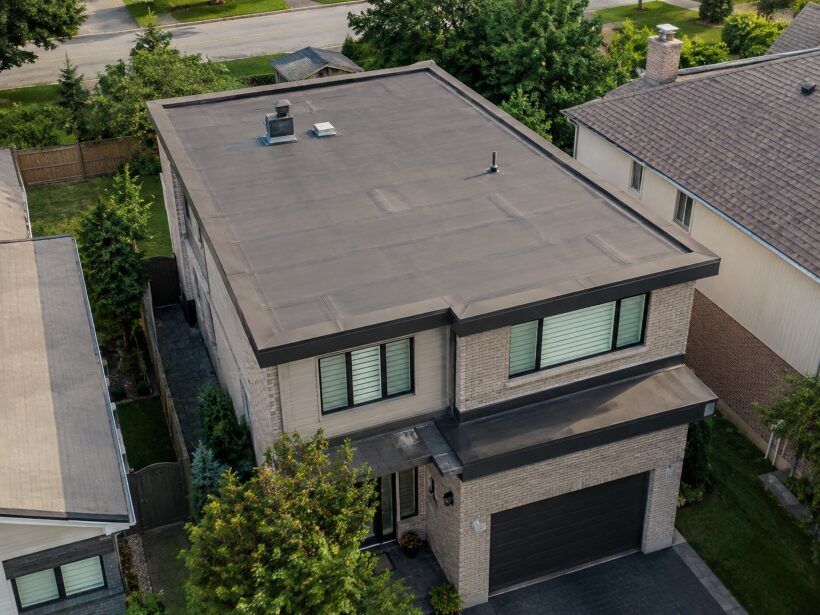
Flat roof repair is one of the most common calls we get from Markham homeowners. Most involve additions, garages, porches, or a low-slope section over a back room. Edmunds has been fixing roofs across York Region for more than 70 years. In that time we’ve seen plenty of small flat roof problems turn into leaks inside the house.
This guide is for Markham homeowners dealing with flat roof issues. Flat roof problems can lead to costly interior damage if not addressed promptly. We’ll cover what usually goes wrong, how a proper repair works, what it costs in Markham, and when to call a professional. If water is coming in right now, skip ahead to the heavy rain section.
Why Flat Roofs Need Different Repairs Than Sloped Roofs
Flat roofs require different maintenance techniques than sloped roofs, making their repair process unique. A flat roof holds water instead of shedding it, so repairing one is a very different job from fixing a shingle roof. On sloped roofs, gravity does most of the work and rain runs straight into the eavestrough.
A flat roof has only a slight slope toward its drains, so water sits longer. That’s why flat roofs use a continuous membrane instead of overlapping shingles. When that membrane fails in one small spot, water can travel underneath and show up somewhere else entirely.
Flat roofs also need different maintenance than sloped roofs. Keeping drains clear matters far more, because every flat roofing system depends on water getting off the roof before it finds a weak spot.
How York Region Weather Affects Your Flat Roof
Markham’s freeze-thaw cycles put stress on flat roofs all winter long. Temperatures swing above and below freezing again and again, and the membrane expands and contracts with each change. Water that seeps into a small crack can freeze, widen the opening, and leave the roof more exposed to the next rain, shortening the roof lifespan in our lake-influenced climate.
Lake-effect snow off Lake Ontario adds to the load. Snow piles up because it can’t slide off a flat roof, and when it melts, the water has nowhere fast to go. That combination of harsh weather conditions is behind a lot of the repairs we do every spring.
Common Flat Roof Problems in Markham
The most common flat roof problems in Markham are ponding water, damaged flashing, membrane cracks, and failed seams. Most start small and stay hidden until water shows up inside, but if ignored they can become a big problem.
Seams are a common weak point. As the membrane ages, seams can separate and the material can shrink, leaving gaps where water gets in. Our cold winters put extra strain on those spots, especially along roof edges.
Blisters and bubbles form when moisture or air gets trapped under the membrane and expands in summer heat. A small blister may not need a repair right away. If it splits open, though, water can get underneath the membrane, so early repair helps avoid more costly repairs later.
Punctures and tears come from foot traffic, falling branches, or dropped tools. If a tradesperson was recently on your roof servicing an air conditioner, check that area first. For more on tracking down water, see our guide on how to find and fix a roof leak.
Ponding Water and Drainage Issues
Ponding water is standing water that stays on a flat roof long after the rain ends. Some puddling for a few hours is normal. Water that’s still there after 48 hours usually points to a drainage or slope problem. The longer it sits, the faster the membrane wears out.
Poor drainage is the usual cause. Clogged drains and scuppers make water pool and put extra stress on the membrane. In Markham, maple keys and leaves fill them fast every fall. A sagging deck can also create low spots, and that calls for fixing the deck before any patch will hold.
Damaged Flashing Around Vents, Skylights, and HVAC Units
Flashing failures around vents, skylights, and HVAC units are one of the top causes of flat roof leaks in Markham. Flashing seals the joints at roof edges and anywhere a vent, pipe or chimney passes through. When it cracks or pulls loose, water runs straight into those joints.
Inside, damaged flashing usually shows up as a brown ring near a bathroom fan or drips around a skylight frame. On buildings with rooftop HVAC units, look for staining where the ductwork comes through. These leaks often appear during wind-driven rain.
Why Does My Flat Roof Leak in Heavy Rain?
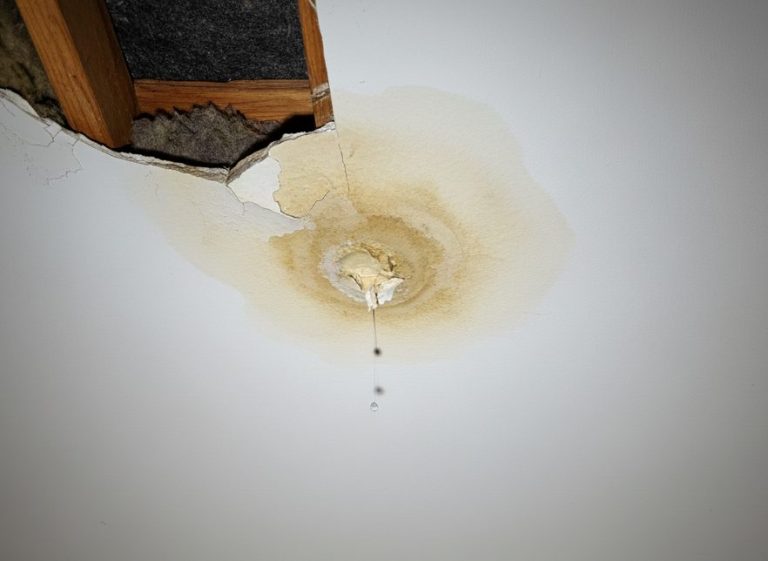
Your flat roof leaks in heavy rain because water arrives faster than the drains can carry it away. A downpour covers the whole roof at once, so a small gap that stayed dry in light rain suddenly has water pressing on it. In my experience, most of these leaks trace back to failed seams or damaged flashing, and poor drainage makes both worse.
If you only see a roof leak during big storms, note where the water appears and how long after the rain started. That helps a roofer find the source much faster.
How Freeze-Thaw Cycles Cause a Flat Roof Leak
Cracks that open up over a Markham winter often don’t leak until the first heavy rain of spring. That’s why so many homeowners call us in April or May about a roof that seemed fine last year.
Snow and ice at the edges of a flat roof can also trap meltwater. If you’ve dealt with ice dams on your roof, the same idea applies. Water backs up under the membrane edges instead of draining away.
Types of Flat Roofing Systems Used in Markham
Identifying the roof system is crucial for effective flat roof repairs. Before anyone can repair a flat roof, they need to know which system is on it, because repair methods vary by system and materials. It also helps when you’re comparing quotes for a repair or a new flat roof installation.
Here’s how the common systems compare on Ontario roofs. Flat roofs typically last 10 to 30 years depending on materials, and actual lifespan still depends a lot on installation quality and maintenance, so treat these as typical ranges, not guarantees.
Material | Typical Lifespan | Best For | Ontario Note |
|---|---|---|---|
Modified Bitumen (SBS) | 15 to 20 years | Homes and commercial buildings | Stays flexible in extreme cold. The most popular choice in Ontario. |
EPDM Rubber | 20 to 25+ years, longer with good maintenance | Commercial and large flat areas | Handles UV and temperature swings well. |
TPO | 15 to 25 years | Commercial, energy-conscious buildings | White surface reflects heat. |
PVC | 20 to 30 years with proper installation | Commercial and chemical exposure areas | Longest potential lifespan. Higher upfront cost. |
Built Up Roofing (BUR) | 15 to 20 years | Commercial and heavy-traffic roofs | Multiple layers of felt and asphalt. Reliable but heavy. |
Modified Bitumen: The Most Common Flat Roof in Ontario
SBS modified bitumen is the flat roofing material I install and repair most often in Markham. It’s a rubberized asphalt sheet, usually laid in two layers, and it stays flexible in extreme cold. Most flat roofs over garages and additions in Unionville and Cornell are modified bitumen. It’s also easy to repair cleanly, since new material bonds well to old when the surface is prepped properly.
EPDM, TPO, and PVC Membranes and Energy Efficiency
Single-ply membranes like EPDM, TPO, and PVC are more common on GTA commercial buildings, but some homes have them too. EPDM is a black rubber sheet that holds up for decades with regular maintenance, making it a cost-effective and durable option for many flat roofs.
TPO and PVC are usually white. Their reflective surfaces help with energy savings by keeping the top floor cooler in July and helping limit uv damage. PVC also handles grease and chemicals, so you’ll see it on restaurants and plazas along Highway 7.
Built Up Roofing (BUR)
Built up roofing, sometimes called tar and gravel, is one of the oldest flat roofing systems still found on commercial buildings in Markham. It’s made from multiple layers of felt and hot asphalt, usually topped with gravel. It’s durable and handles foot traffic well, but it’s heavy, so we rarely install it on homes anymore.
How Do You Repair a Flat Roof?
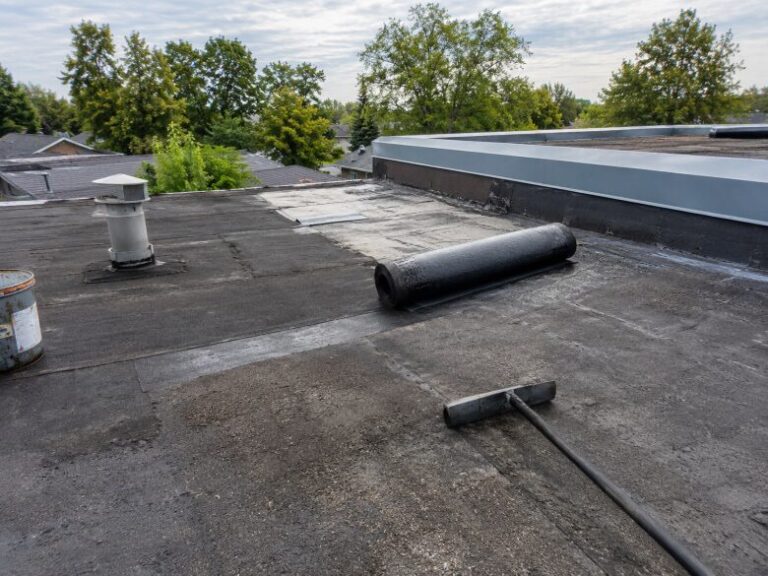
You repair a flat roof by treating the work as a roofing project: find the real source of the damage, then dry the area and apply a compatible patch. Here’s what a qualified roofing contractor should be doing on a typical repair:
Step-by-Step Flat Roof Repair Process
Inspect the roof and trace the leak back to its source.
Confirm the membrane type and check whether the surrounding roof is sound enough to patch. Widespread wear may call for a larger repair.
Cut out any wet insulation or soft decking under the damaged area and replace it.
Clean the repair area and let it dry completely.
Apply a compatible patch or new membrane, overlapping sound roofing on all sides.
Check the seams and flashing around the repair before calling it done.
Step four gets skipped more often than it should. A patch applied over dirt or moisture can let go within weeks. Wet insulation left in place rots the deck, and the leak comes back.
Why Proper Inspection Matters
Every flat roof repair starts with a proper inspection, because the leak source is often nowhere near the stain on your ceiling. Water runs along the deck under the membrane until it finds a gap to drip through. I’ve traced leaks that entered three metres from where they showed up inside.
Regular flat roof inspections also catch small issues, like a lifting seam or a cracked pipe boot, before they become bigger repairs. Our roof inspection checklist walks through what we look at.
Matching the Repair to the Membrane Material
A patch that works on modified bitumen will fail on a TPO membrane, so the repair method has to match your roof. Modified bitumen is usually repaired with compatible sheets that are torched or self-adhered. TPO and PVC patches are typically heat-welded to the existing sheet. EPDM needs its own primer and seam tape.
Exact products vary by manufacturer, and a good roofer follows their specs. Using the wrong product is one of the most common mistakes I see from quick-fix jobs. Matching the membrane correctly is what delivers long lasting results, instead of a patch that looks fine for a month and then peels off in the first cold snap.
What Is the Best Way to Repair a Flat Roof?
The best way to repair a flat roof depends on how much of the roof is still in good shape. An isolated tear on a healthy membrane may only need a compatible patch, but the best approach should be based on tailored solutions for the roof’s condition, not a one-size-fits-all fix. Widespread cracking, soaked insulation, or a soft deck usually call for a bigger repair or a replacement.
Before you approve a repair, ask your roofer these questions. A professional should be able to answer all of them plainly.
What caused the leak?
Has moisture reached the insulation or deck?
Does the repair fix the cause, or only the hole?
What does the warranty cover?
Temporary fixes do have their place. If water is coming in during a storm, a quick seal buys time until a proper repair can be done. In Markham, though, a temporary patch rarely survives a full winter of freeze-thaw, so even minor emergency work should still be properly fixed afterward for long-lasting solutions.
How Much Does Flat Roof Repair Cost in Markham?
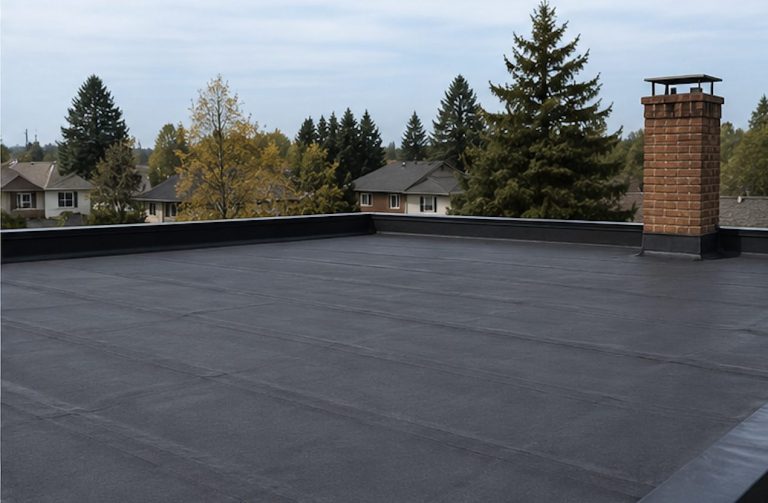
Most residential flat roof repairs in Markham cost between $300 and $1,500. The price depends on the type of damage, the membrane material, the size of the area, and how easy the roof is to reach. Resealing flashing around a vent sits at the low end. Cutting out wet insulation or replacing decking runs higher.
Flat roof repairs can extend the roof’s lifespan significantly and are often more cost-effective than replacing it. Rooftop equipment that has to be worked around adds labour. Emergency repairs during a storm or on a weekend usually cost more. TPO and PVC repairs need heat-welding equipment, which can add to a small job. These are general estimates, and the only way to get a firm number is to have the roof looked at.
Repair is usually the most cost effective choice when the rest of the roof is in decent shape. Restoration coatings are another option for roofs with general wear but a dry, solid deck. Some coating suppliers claim savings of up to 70% over re-roofing, but coatings aren’t a fix for wet insulation or a damaged deck.
If a storm caused the damage, check whether your home insurance covers roof leaks before paying out of pocket. Insurance claims for sudden damage are usually treated differently from wear and tear.
Flat Roof Repair vs. Flat Roof Replacement: What Costs More?
A targeted repair costs a fraction of a full flat roof replacement, which typically runs $5,000 to $15,000 or more for a home. If a repair is no longer enough, it helps to plan ahead while you budget for replacement; for readers also comparing flat roof replacement Toronto pricing or services, those numbers can vary by area and scope. A garage roof sits at the low end, while a large addition can go well past the top. Commercial roofs are priced differently because of their size.
A good repair can add years to an otherwise healthy roof, which makes it the cost effective solution for isolated problems. Our guide on deciding between repair and replacement goes into the math in more detail.
When Your Flat Roof Needs Full Replacement
A flat roof needs full replacement when the damage is spread across the roof instead of in one spot. When recurring repairs across the building make patching impractical, replacement is often the better option. These are the signs I look for:
Leaks in several different areas
Cracking or wear across most of the membrane
Wet insulation or soft decking over a large area
Repairs that keep failing, so you’re calling a roofer every season
Age alone isn’t a reason to replace. A well-kept roof can outlast the ranges in the table above, while a poorly installed one may fail early. Many low slope roofing sections on additions, garages, or porches eventually reach the point where replacement makes more sense than another repair. Once a membrane turns brittle, though, Markham winters add cracks faster than they can be patched. At that point, a new roof installation with proper insulation is the better investment, and a roof replacement usually improves energy efficiency too, whether it’s a detached home or a shared roof on a semi or townhouse. That applies in Markham just as much as in broader flat roof repair Toronto comparisons.
Flat Roof Maintenance Tips for Markham Homeowners
Routine Maintenance Tasks
Regular maintenance is the cheapest way to extend the life of your flat roof and avoid expensive emergency repairs. Most of it takes an hour or two a year. Here are some key maintenance tasks:
Clear your drains and scuppers in spring after the snow melts, and again in late fall once the leaves are down.
Trim back any branches that hang over the roof so they don’t drop debris or scrape the membrane.
Once a year, have a professional do a full roof inspection, including the flashing around vents and skylights. For residential properties, a spring visit after the freeze-thaw season makes the most sense. Commercial buildings with rooftop equipment often benefit from a fall check too.
After Storm Maintenance Checks
After a major storm, look for fallen branches or anything that could have punctured the roof. If you can’t check safely from a ladder, leave it to a roofer. Never pressure wash a flat roof membrane, since it can force water into the seams.
Flat Roof Repair Services in Markham from Edmunds Home Improvements
If you need flat roof repair in Markham, Edmunds Home Improvements has been serving York Region homeowners since 1947. I’ve spent more than 30 years on roofs across Markham, and our team provides roofing services for homes and commercial properties, handling residential and commercial flat roofs of every size, including commercial building roof repairs.
We look at the whole roof before recommending a repair or a replacement. You’ll hear what needs fixing and why, with clear explanations and upfront pricing to provide excellent service, and our work is backed by a warranty.
Our skilled team is WCB covered.
Dealing with a leak, or wondering how much life your flat roof has left? Contact us for a free estimate or call 905-472-0276. You can also read more about our flat roof repair services. For any other roofing or home renovation work.

Steve Gibson
President & CEO, Edmunds Home Improvements
Steve Gibson has over 35 years of hands-on experience in home renovation across
Markham and the Greater Toronto Area. As President and CEO of Edmunds Home
Improvements — a company serving the community since 1947 — Steve specializes in
roofing installation and repair, siding, window replacement and installation, and
door installation. A longtime local resident, he took ownership of Edmunds in 1989
and has built the company into one of the GTA’s most trusted exterior renovation
contractors. Edmunds is fully insured (WSIB and $5 million public liability) and
is a BBB Accredited Business and ENERGY STAR partner.
- Roofing installation and repair
- Siding installation
- Window replacement and installation
- Door installation
- Eavestrough and soffit installation
- Exterior home renovation (Markham, ON and Greater Toronto Area)
3400 14th Ave, Unit #28,
Markham,
ON
L3R 0H7