
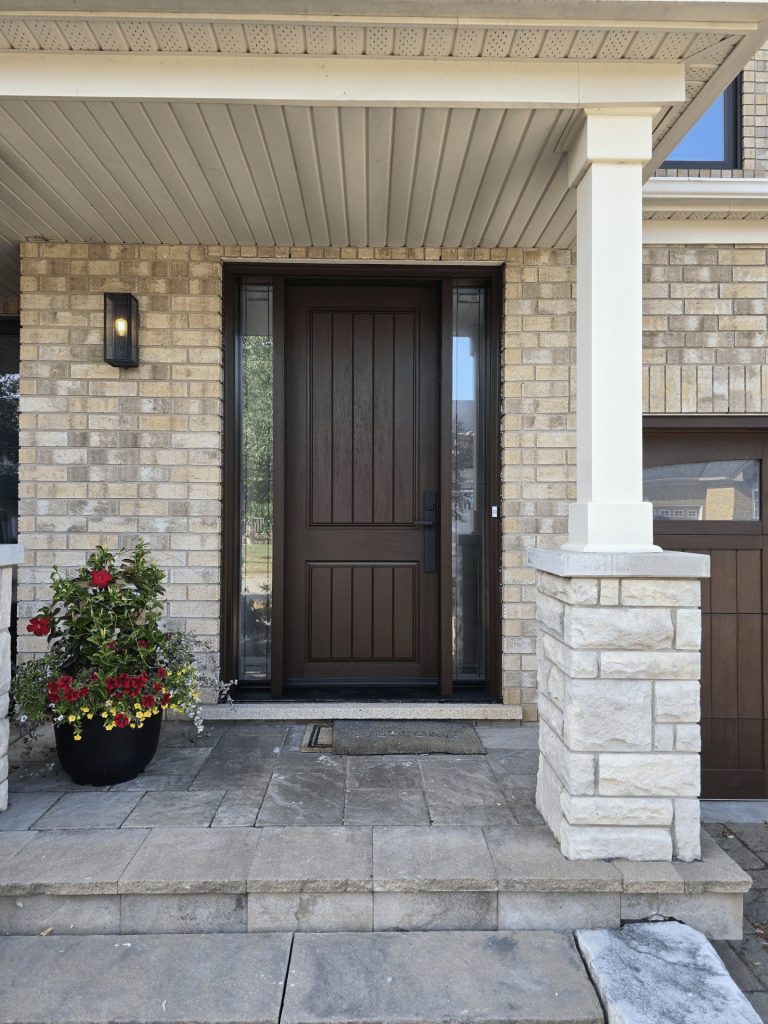
Doors are some of the most used parts of any house, and they break for all kinds of reasons. Violent temper tantrums, moving accidents, kids roughhousing, or just decades of daily wear and tear. These kinds of situations are more common than you would think, and you don’t have to be stuck looking at (and using) a broken door for years.
No matter how the damage happened, fixing a broken door is usually more straightforward than people expect. Most repairs take an afternoon and a few basic tools from any hardware store in Markham. This guide is for Markham homeowners and anyone in the GTA looking to save money and restore their doors without costly replacements. It covers the most common types of door damage we see across the GTA and York Region, from fixing frame and jamb issues to patching a hole in a hollow core door panel, and complements our exterior home renovation examples in Markham that show how upgraded doors fit into a full project.
Should You Repair or Replace a Broken Door?
Repairing a broken door is almost always cheaper and faster than replacing it. A tube of wood filler and some sandpaper cost under $30. A new door slab runs $80 to $250, plus the money and time to hang it.
Repair makes sense when the damage is cosmetic: dents, scratches, small holes, or minor cracks. It also makes sense for interior doors in non-standard sizes. Older houses in neighbourhoods like Historic Unionville and Cathedraltown sometimes have openings that do not match modern pre-hung dimensions. Finding a replacement that fits without reframing the opening is a headache.
You should replace instead of repair when a hollow core door has a large hole, when the entire frame is badly rotted, or when there are multiple areas of structural damage. If the door is still in good condition but the frame is shot, replace just the frame and keep the original door. If a new door slab will fit your space, replacement can be the faster option. Of course, the decision comes down to the cost of materials, the extent of the damage, and how much time you want to spend.
Tools and Materials You Need for Door Repairs
Before you start fixing anything, gather your materials. Most items are available at hardware stores in Markham or the GTA.
Wood Filler and Epoxy
Standard wood filler (for small repairs on interior doors)
2-part epoxy wood filler (for deeper damage or exterior door repair)
Putty knife (for application)
The epoxy version stands up to the freeze-thaw cycles Markham gets every winter. Mix the resin and hardener until the colour is uniform, then apply with a putty knife.
Cutting and Removal Tools
Hammer
Chisel
Reciprocating or oscillating saw (if needed)
Tape measure (non-negotiable for any job that involves cutting)
Drill (for reinstalling hardware and driving screws)
Finishing Supplies
Sandpaper (120-grit for initial smoothing)
Sandpaper (220-grit for the final pass before painting)
Wood primer
Paint that matches your existing door
Weatherproof finishes (for exterior doors in Ontario)
For exterior doors in Ontario, use weatherproof finishes. Markham winters put serious stress on any coat that is not rated for temperature swings.
How to Assess the Damage on Your Broken Door
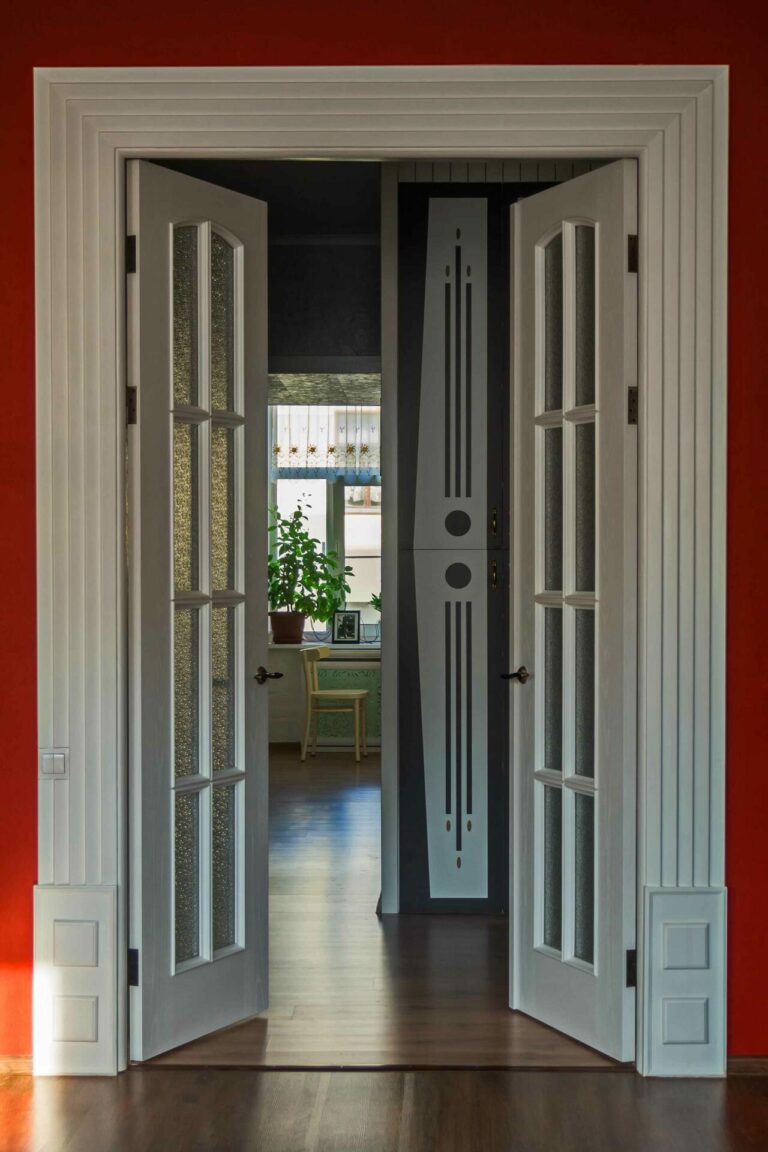
Fixing a broken door starts with identifying the type of damage. Surface damage refers to cosmetic issues like dents, scratches, or small holes, while structural damage involves deeper problems such as cracks in the door frame or issues with the door’s hardware. Repairing a door requires identifying whether the issue is surface or structural damage. Fixing a broken door involves assessing damage to the door frame or hardware. Your approach depends on whether you are dealing with cosmetic or structural damage. In Markham, exterior door frames are especially vulnerable to moisture and freeze-thaw cycling, which can turn a small crack into a split over a single winter.
Dents, Scratches, and Small Holes
Cosmetic damage includes dents, scratches, shallow gouges, and nail holes. These are the easiest to fix. A bit of filler, some sanding, and a coat of paint will cover most of this type of damage completely. Later in this post, we walk through the process step by step.
Structural Damage: Cracks, Splits, and Rot
Structural damage goes deeper. A cracked door frame, wood rot, or a split through the full thickness of the wood all count. In older Markham homes, especially in Berczy Village or Cornell, original door frames may have accumulated this kind of damage over decades. If you can push a screwdriver into the wood and it sinks easily, you are dealing with rot.
Door Frame and Door Jamb Problems
A door frame issue is separate from damage to the door panel itself. A warped door frame can make a perfectly good door stick or refuse to latch. The jamb is the vertical part of the frame where the hinges and strike plate mount. If the jamb is cracked, the door will not close properly.
How Do You Fix a Broken Door Without Replacing It?
You fix a broken door without replacing it by identifying the damage and using the right filler, glue, or patch. Wood filler handles most cosmetic fixing. For cracks in solid wood, glue and clamps hold pieces together. For hollow core doors with holes, wire mesh gives filler something to grip. For frame issues, you may need to cut out the damaged area and install new wood.
Fixing Surface Damage: Holes, Dents, and Gouges
Clean the damaged area first. Brush out loose material and wipe with a damp cloth. Let it dry before applying anything.
Mix your 2-part wood filler, then press it into the damaged area with a putty knife. Apply more than you think you need. After about 5 minutes, use a utility knife to slice off excess filler while it is still rubbery. Let it cure for 30 to 60 minutes, then sand smooth with 120-grit sandpaper. Run your hand across the repair to check that it is flush. Follow with 220-grit, then prime and paint.
Patching a Hollow Core Door
Hollow core doors are common in Markham houses built from the 1980s onward. They have a thin skin over a cardboard interior. When one gets hit hard enough, the skin collapses. Many homeowners assume they need to replace the whole door, but that is not always the case.
Trim any jagged edges around the hole. Cut a piece of wire mesh or stiff cardboard slightly larger than the opening and insert it into the space behind the damaged area. Hold it in place with a bit of glue. Fill the hole with wood filler, building up thin layers and letting each dry. Once level with the surrounding panel, sand smooth, prime, and paint.
Filling Dents and Gouges on Solid Doors
Solid doors are more forgiving to repair. Apply 2-part wood filler directly to the damaged area. Smooth it while workable, let it set, then sand flush. Prime and paint. For stained doors, tinted fillers or wood stain markers can help blend the repair into the grain.
How Do You Fix a Broken Wooden Door?
You fix a broken wooden door by cleaning the damaged area, applying wood glue to any cracks, clamping the pieces together, and filling remaining gaps with epoxy or wood filler.
Gluing and Clamping Split Wood
For a clean crack, work carpenter’s glue into the split. Press the pieces together and clamp firmly. Wipe away excess glue before it dries. Leave clamps on for at least an hour. If the wood is too damaged to hold clamps, reinforce the repair with a few screws driven from the edge where they will not show.
Dealing with Wood Rot
Wood rot usually shows up at the bottom of exterior door frames where snow and ice melt collect. In the GTA, proximity to Lake Ontario and Lake Simcoe increases humidity, which accelerates rot in untreated wood.
Remove all soft, rotted wood with a chisel. Fill the cavity with wire mesh or scrap boards to give the filler something to bond to, then pack it with epoxy filler. Let it harden overnight, sand the surface smooth, and seal with primer and paint. If the damage covers a large area, you may need to replace the affected section or even the entire frame, and if rot shows up in multiple places, replacing the whole frame is usually more practical than patching separate spots. At that point, fixing it is no longer practical and replacement is the better investment.
Repairing a Split Door Frame
A split door frame is common in houses that have settled over time. Fixing a split involves removing the trim, cutting out the damaged section, and installing new wood.
Cutting Out the Damaged Area
Remove the door stop and molding. Measure 5 inches above and below the damaged area with a tape measure and mark your cut lines. Use an oscillating saw to carefully cut the section out of the frame.
Installing New Wood
Cut a piece of timber to the same size as the section you removed. Match the species and thickness of the original. This section-by-section repair works best when the frame is damaged in one area, not in multiple places. Dry-fit the new piece, then apply glue and press it into place. Secure with screws every 3 inches. Fill gaps between the new wood and old frame with caulk. Prime and paint the new piece to match. Finally, reattach the molding and door stop and install the hinges back in position.
How to Fix a Warped Door Frame
A warped door frame makes a door stick, drag, or refuse to close. Fixing a warped frame in Markham is common because the temperature difference between a heated room and a cold exterior wall causes the wood to shift.
Removing the Door Stop and Molding
Pry off the door stop and trim molding. Work from the bottom up. Once the frame is exposed, cut through shims behind it with a reciprocating saw.
Straightening and Reinstalling the Frame
Place a flat piece of scrap wood against the warped section and tap it with a mallet. Check the gaps between the door and frame with a tape measure. They should be even. Tightening hinge screws can sometimes fix minor misalignment without removing any trim.
Once straight, reinstall shims at the hinge post and latch locations. Nail shims every 1 foot to keep them secure. Reattach the molding and door stop with a nail gun or finishing nails. Test the door to make sure it swings freely and latches without rubbing.
Replacing a Broken Door Jamb
If the damage to your door jamb is too extensive to patch, you need to replace the entire jamb. This is the most involved repair covered in this post, but it is still a manageable weekend project.
Removing the Old Door Jamb
Remove the hinges and any hardware from the damaged jamb. Use a pry bar to pull the trim molding off, then pull the old jamb away from the wall. Check for remaining nails or screws holding it in place.
Installing the New Door Jamb
Measure the opening with a tape measure. Cut new timber to size and install shims at the top, bottom, and middle of the frame. Drill screws through the jamb and shims into the wall stud. Check plumb with a level. Finally, reattach the molding, cut a latch hole, and install the hardware. Test the door to confirm it opens, closes, and latches properly.
Can You Fix a Door That's Been Punched?
Yes, you can usually fix a door that has been punched, but the method depends on whether the door is hollow core or solid wood. The team at Edmunds sees this type of damage more often than people might think. There is no judgment here.
For a hollow core door with a small hole, use the wire mesh and filler method. Larger holes are usually not worth fixing. It is cheaper to replace the door entirely. A new slab costs $80 to $150, and the swap takes less than an hour if the hinge cutouts match. For solid wood doors, glue and clamp any splits. A door reinforcement plate can cover a damaged knob hole for under $20. Either way, fixing the damage is almost always cheaper than replacing the entire door and frame.
How Do You Open a Door When the Mechanism Is Broken?
If your door handle or latch mechanism is broken, you can usually open the door by removing the handle plates and manually retracting the latch with a flathead screwdriver. Slide the tool into the gap between the door and frame and push the bolt back to gain access.
If the handle turns but the latch does not retract, the mechanism is likely stripped. Remove the screws on the inside plate, pull the knob assembly out, and use pliers to turn the latch directly. A stuck latch can also result from a misaligned strike plate on the jamb. Loosening the screws and shifting the plate a few millimetres can fix the problem.
Special Considerations for Exterior Doors in Markham
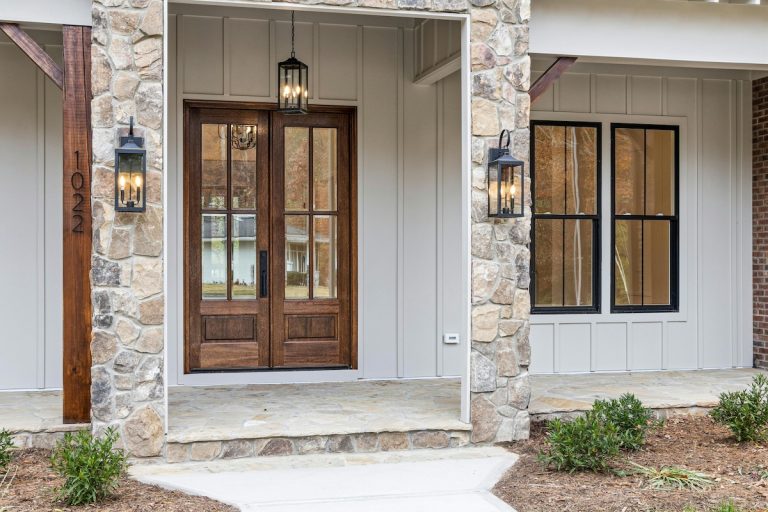
Exterior doors in Markham face challenges that interior doors do not. York Region winters bring repeated freeze-thaw cycles that cause door frame expansion and contraction. Snow melt accelerates rot at the base of the frame.
Check your weatherstripping at least once a year, ideally before November. Cracked strips let cold air into every room and add money to your heating bill. Seal gaps with fresh weatherstripping or caulk and make sure the paint covers every exposed edge of the door. If you are considering a new entrance door system, our guide on choosing steel, fibreglass, or wood covers the options. You may also want to read about adding a storm door for extra protection, and remember that winter can be the best time for window and door installation in Markham when schedules are more flexible and discounts are available.
When to Call a Professional for Door Repairs
Some repairs are straightforward enough for a weekend project. Others are worth handing off to a pro. If you are dealing with extensive rot in the wall framing, a door that has shifted because the house has settled, or you need to replace multiple doors at once, a contractor will save you time and money.
When hiring a contractor in Ontario, ask for a WSIB clearance certificate. This confirms the company carries workplace safety insurance. Any reputable contractor in Markham will have one ready.
If you need door installation in Markham or want a second opinion on a repair, we are happy to come take a look. Our post on getting your home ready for winter also covers the door and window checks worth doing before cold weather hits.
Keep Your Doors in Good Shape
Most broken door repairs are manageable with basic tools and patience. Wood filler, sandpaper, and paint handle the majority of fixing surface damage. Frame repairs take more time, but the materials are inexpensive and fixing a frame is straightforward if you follow the steps in this post.
Whether you need to repair a single door or replace several throughout your house, the team at Edmunds Home Improvements is here. We have been serving Markham and the GTA since 1947, and doors are one of the many things we handle. Give us a call at 905-472-0276 or visit edmundshomeimprovements.com to book a free estimate. We are always happy to look at a broken door and give you an honest opinion on whether fixing it or replacing it makes the most sense for your house.

Steve Gibson
President & CEO, Edmunds Home Improvements
Steve Gibson has over 35 years of hands-on experience in home renovation across
Markham and the Greater Toronto Area. As President and CEO of Edmunds Home
Improvements — a company serving the community since 1947 — Steve specializes in
roofing installation and repair, siding, window replacement and installation, and
door installation. A longtime local resident, he took ownership of Edmunds in 1989
and has built the company into one of the GTA’s most trusted exterior renovation
contractors. Edmunds is fully insured (WSIB and $5 million public liability) and
is a BBB Accredited Business and ENERGY STAR partner.
- Roofing installation and repair
- Siding installation
- Window replacement and installation
- Door installation
- Eavestrough and soffit installation
- Exterior home renovation (Markham, ON and Greater Toronto Area)
3400 14th Ave, Unit #28,
Markham,
ON
L3R 0H7